
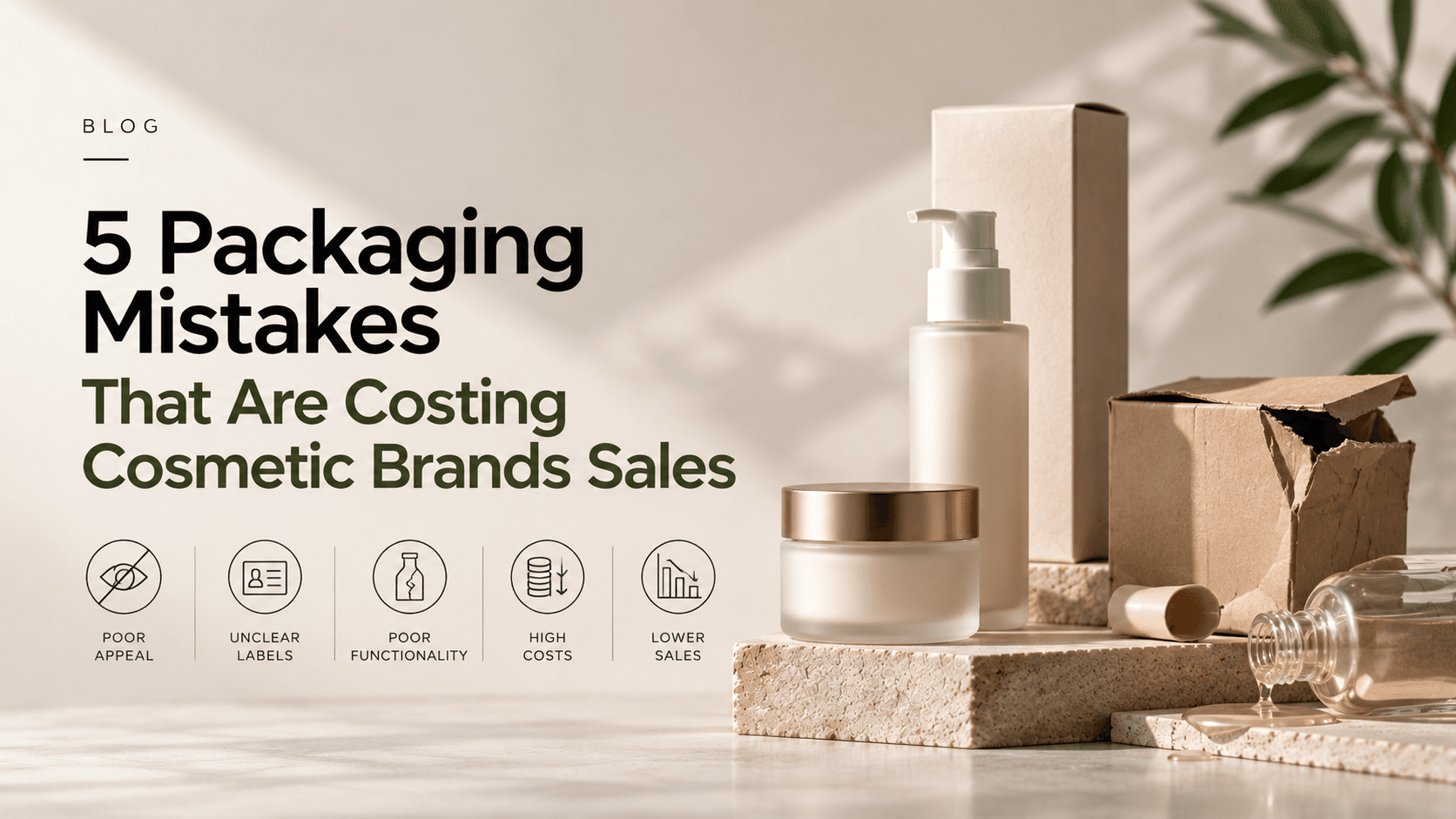
5 Packaging Mistakes That Are Costing Cosmetic Brands Sales
In the cosmetics industry, packaging does much more than protect a product. It influences first impressions, communicates brand identity, shapes customer expectations and can affect purchasing decisions.
Imagine a customer browsing an online beauty store. Two skincare products offer similar benefits, but one has unclear labelling, generic packaging and an inconsistent design, while the other features a clean visual identity, readable information and a professional finish. The second product may create a stronger first impression before the customer even compares the ingredients.
This is why cosmetic packaging mistakes can become costly for brands. Poor packaging decisions can weaken product presentation, create confusion, affect usability and make it harder for a brand to stand out in a competitive market. For businesses developing skincare, haircare, body care, makeup or personal care products, identifying these mistakes early can help improve the customer experience and build a more recognisable brand.
Why packaging matters for sales — effective packaging helps brands:
However, packaging that looks attractive is not automatically effective. It must also be functional, appropriate for the product, aligned with the target audience and commercially practical.
5 Cosmetic Packaging Mistakes to Avoid
Here are five common packaging mistakes that may be holding cosmetic brands back, and how to avoid them.
Choosing Packaging Based on Appearance Alone
One of the most common mistakes is choosing a bottle, jar or container simply because it looks attractive. A beautiful package may catch attention, but it still needs to work with the formulation, protect the product and provide a convenient user experience. A serum may look sophisticated in a glass dropper bottle, yet its suitability depends on the formulation, dispensing needs and protection requirements. Likewise, a thick cream needs a different dispensing solution from a lightweight lotion.
Ignoring Brand Identity and Visual Consistency
A brand may invest in a logo, website and social media yet still use packaging with inconsistent colours, fonts and layouts. This creates a disconnected experience, and customers struggle to recognise products across channels, especially when the brand offers multiple SKUs. A premium skincare brand with minimalist branding weakens its positioning if every product has a completely different visual style. Consistent packaging helps customers associate every product with the same brand.
Using Labels That Are Difficult to Read
Packaging can look visually impressive and still fail to communicate important information. Small fonts, poor contrast, overcrowded layouts and inconsistent typography make labels hard to read, which is particularly problematic when customers need to identify the product type, understand usage or check product information. Poor label design can also make products appear less professional.
Overlooking the Customer’s Unboxing and Usage Experience
Packaging is not just about how a product looks on a shelf. It also shapes what happens when a customer receives, opens and uses it. A poorly designed package can create frustration even if the product is excellent, and can increase complaints, returns or negative reviews. For ecommerce and D2C brands, packaging must also withstand storage, handling and transportation.
Choosing Packaging Without Considering Costs and Scalability
Premium bottles, specialised closures, complex printing and elaborate cartons can look impressive, but they can also raise production costs, minimum order quantities and operational complexity, putting pressure on pricing and margins. The opposite is also a problem: the cheapest packaging may weaken presentation, reduce durability or clash with the brand’s positioning. A design that works for a small trial batch may need adjustments as volumes grow.
How Custom Cosmetic Packaging Can Help Brands Stand Out
Avoiding mistakes is only the first step. Custom cosmetic packaging lets businesses build a presentation that reflects their identity, audience and market positioning. A premium skincare brand may use a restrained palette and refined finishes, while a youthful haircare brand may use bold colours and expressive typography. Neither approach is automatically better — the best solution matches the intended customer and product experience.
Cosmetic Packaging Mistakes to Check Before Production
Before approving artwork or starting manufacturing, use this checklist. Reviewing these points early helps catch problems while changes are still manageable.
| Area | What to Check |
|---|---|
| Product compatibility | Is the container suitable for the formulation? |
| Functionality | Is the product easy to dispense and use? |
| Brand identity | Does the packaging reflect the brand’s positioning? |
| Visual consistency | Do products follow a recognisable design system? |
| Label readability | Are important details clear and legible? |
| Compliance | Have applicable labelling requirements been reviewed? |
| Durability | Can the packaging withstand expected handling and transport? |
| Testing | Have appropriate compatibility and stability evaluations been completed? |
| Cost | Does the packaging fit the product’s pricing and margin requirements? |
| Scalability | Can the packaging be sourced consistently as demand grows? |
| Customer experience | Is the package convenient from delivery to everyday use? |
How a Cosmetic Manufacturer Can Help Prevent Packaging Mistakes
Packaging involves several connected decisions: formulation, container selection, filling, labelling and production planning. Before selecting a manufacturing partner, ask about the points below. The exact services vary by manufacturer, so confirm the scope of support before finalising an agreement.
How Gladios Supports Cosmetic Brands
For businesses planning to launch or expand a cosmetic product range, packaging should be considered alongside formulation and manufacturing.
Gladios Products Pvt. Ltd. offers private label manufacturing and custom formulation services for cosmetic and personal care brands. Explore product development options and discuss your formulation, packaging and manufacturing requirements before moving toward commercial production.
Explore Private Label ManufacturingPackaging Is Part of the Brand
Packaging can influence how customers discover, understand and experience cosmetic products. The five major mistakes to avoid are choosing packaging based only on appearance, ignoring brand consistency, using difficult-to-read labels, overlooking the customer experience and failing to plan for costs and scalability.
The solution is not necessarily to choose the most expensive packaging. It is to choose packaging that works for the product, communicates the brand clearly and meets the needs of the target customer. By evaluating functionality, design, compliance, cost and production requirements before launch, cosmetic brands can create packaging that supports long-term growth.
For businesses developing new skincare, haircare or personal care products, thoughtful custom cosmetic packaging can be an important part of building a distinctive and consistent brand experience. Ready to begin? Talk to our team.