
How Fast-Growing Skincare Brands Scale Without Owning a Factory
Building a skincare brand involves much more than developing a good product and creating attractive packaging. As demand increases, founders must also solve a critical challenge: how to manufacture at a larger scale without letting costs and operational complexity slow growth.
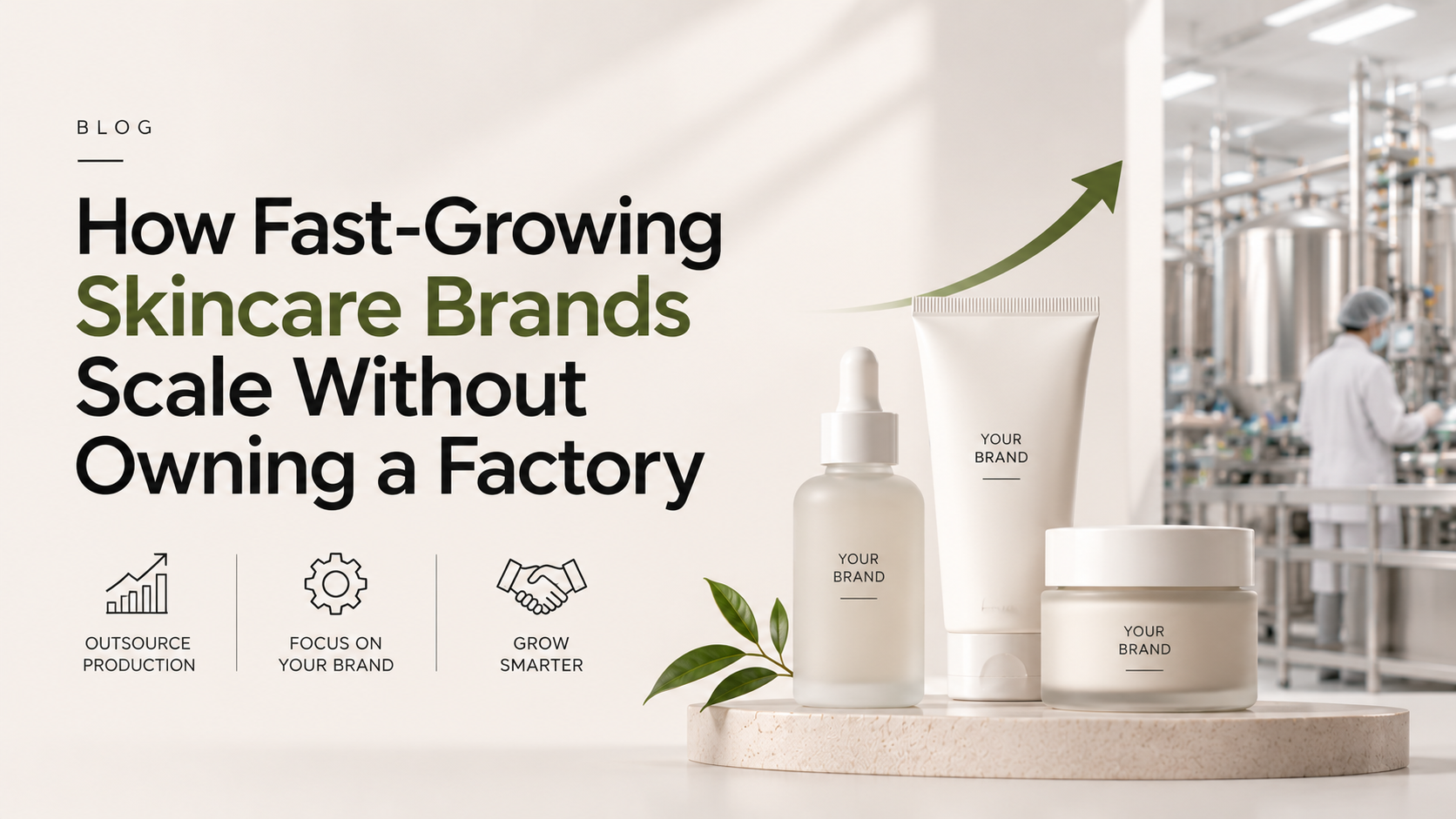
Building a skincare brand involves much more than developing a good product and creating attractive packaging. As customer demand increases, founders must also solve a critical business challenge: how to manufacture products at a larger scale without allowing production costs and operational complexity to slow down growth.
For many emerging and fast-growing skincare brands, owning a manufacturing facility is not the most practical way to expand. Setting up a factory requires significant capital investment, manufacturing equipment, technical personnel, quality control systems, regulatory compliance and ongoing operational management. These responsibilities can divert attention and resources away from product innovation, marketing, distribution and customer acquisition.
This is where skincare contract manufacturing becomes an important business strategy. By partnering with an established cosmetic manufacturer, skincare brands can outsource production while retaining control over their brand identity, product positioning, marketing and customer relationships.
In this guide, we explore how skincare businesses can scale production without owning a factory, how outsourced manufacturing works and what founders should consider when selecting a manufacturing partner.
Why skincare brands do not always need their own factory
In the early stages, founders focus on product development, branding and market entry. As sales increase, production requirements become more demanding — a brand that initially requires a few hundred units may eventually need thousands. Building an independent facility may seem the natural next step, but factory ownership introduces several responsibilities:
These activities require both financial resources and operational expertise. Instead of building this infrastructure independently, brands can use skincare contract manufacturing to access an existing manufacturing setup, allowing founders to focus on developing their business while production is handled by a partner under agreed specifications and responsibilities.
10 Things to Know About Scaling Without a Factory
From understanding the model to choosing the right partner, here is how skincare brands can expand with outsourced manufacturing.
Understanding Skincare Contract Manufacturing
Skincare contract manufacturing is a business arrangement in which a brand partners with an external manufacturer to produce skincare or personal care products.
The manufacturer handles agreed production activities, which may include formulation development, raw material sourcing, manufacturing, filling, packaging and quality checks. The brand sells the finished products under its own identity. Depending on the arrangement, a manufacturer may also support product development through custom formulation or offer existing formulations that can be adapted to the brand’s requirements.
For example, a skincare startup planning to launch a moisturiser, face wash and serum does not necessarily need to purchase production equipment or establish its own factory. It can work with a suitable manufacturing partner to develop and manufacture these products.
This is one of the reasons skincare contract manufacturing is widely considered by startups, D2C brands and established businesses looking to expand their product portfolios.
Scale Production Without Heavy Capital Investment
One of the biggest challenges of owning a factory is the initial investment. A manufacturing facility requires expenditure on infrastructure, machinery, utilities, personnel and maintenance before the business generates revenue from production. For a growing skincare brand, this may limit the budget available for other important business activities.
Outsourcing production can reduce the need for these direct investments. Instead of purchasing equipment, brands can work with manufacturers that already have relevant production infrastructure. This can help businesses allocate more resources towards:
Through skincare contract manufacturing, brands can pursue production expansion without taking on the entire financial and operational responsibility of establishing a factory.
Expand Your Product Range Through Custom Formulation
As a skincare brand grows, customer expectations and market opportunities may change. A business that initially sells moisturisers may want to introduce cleansers, toners, serums, sunscreens or specialised skincare products. Developing every product independently requires formulation knowledge, ingredient evaluation, testing and manufacturing capabilities.
Working with a manufacturer that offers custom formulation support can simplify this process. Custom formulation allows brands to develop products according to their intended requirements, such as:
For example, a brand may want to develop a lightweight moisturiser for its existing customer base. Its manufacturing partner can work towards the desired formulation specifications and evaluate the product through appropriate development and testing procedures.
This makes skincare contract manufacturing useful not only for producing existing products but also for supporting product portfolio expansion.
Use Private Label Manufacturing to Enter New Categories
Not every brand needs to develop every formulation from scratch. Private label manufacturing can offer another route for businesses looking to introduce products under their own brand identity.
In this arrangement, manufacturers offer existing formulations or product options that brands can select and market under their own branding, subject to the manufacturer’s available options and applicable agreements. This can be useful for founders who want to explore new product categories without managing the entire formulation development process independently.
For example, an established skincare brand selling face washes may want to introduce a moisturiser or body lotion. Instead of developing a completely new manufacturing setup, the brand can explore suitable private label options with a manufacturer. Before selecting a product, founders should evaluate:
Private label manufacturing and skincare contract manufacturing can therefore support different stages of brand expansion, depending on how much product development involvement the founder requires.
Access Manufacturing Expertise and Production Infrastructure
Manufacturing skincare products requires more than combining ingredients. Different product categories involve different processing requirements, equipment, production conditions and quality checks. For example, a face serum, moisturising cream, shampoo and facial cleanser may require different manufacturing processes.
An experienced manufacturing partner can provide access to relevant infrastructure and technical expertise, depending on its capabilities. This may include:
For a growing brand, accessing an existing manufacturing setup can be more practical than developing every capability internally.
A suitable skincare contract manufacturing partner should be able to explain how it manages production requirements and maintains consistency between batches.
Manage Growing Demand Without Expanding Your Own Facility
One of the most important challenges for a growing skincare brand is managing changing production volumes. Demand may increase because of successful marketing campaigns, seasonal sales, retail partnerships or expansion into new markets. If production capacity is limited, the brand may face stock shortages, delayed orders and missed sales opportunities.
Working with an external manufacturer can provide access to production infrastructure without requiring the brand to build its own facility. However, outsourcing does not automatically guarantee unlimited manufacturing capacity. Before scaling, founders should discuss:
A well-planned skincare contract manufacturing arrangement should consider both current production requirements and anticipated future demand. This helps brands make realistic inventory and sales forecasts.
Maintain Product Quality While Increasing Production
Scaling sales is only valuable when product quality remains consistent. Customers expect a product to deliver a similar experience every time they purchase it. Changes in texture, colour, fragrance, viscosity or appearance can affect customer confidence.
As production volumes increase, brands must ensure that manufacturing procedures and quality specifications are properly established. Important quality considerations include:
Raw Material Quality — Ingredients should meet defined specifications, with suitable supplier evaluation and incoming material checks.
Manufacturing Process Controls — Manufacturers should follow documented procedures covering ingredient quantities, addition sequence, processing temperatures and mixing conditions.
Batch-Wise Testing — Finished products should be checked against relevant specifications, which may include appearance, pH, viscosity and microbiological quality, depending on the formulation.
Stability Evaluation — Appropriate stability studies help assess how products behave under defined storage conditions.
Packaging Compatibility — The selected packaging should be evaluated for compatibility with the formulation and its intended use.
Understand MOQ and Production Planning Before Scaling
Minimum Order Quantity, commonly known as MOQ, is an important consideration when choosing a manufacturing partner. It refers to the minimum quantity a manufacturer is willing to produce for a particular product or order. MOQs can vary depending on:
For startups, high MOQs may create inventory and cash flow challenges. For established brands, production quantities that are too low may increase the cost per unit or make production planning less efficient. Founders should discuss MOQ requirements before finalising a manufacturing arrangement.
It is also important to consider how quickly the products are expected to sell. Producing large quantities without sufficient demand forecasting can lead to excess inventory, storage costs and potential product expiry concerns.
With skincare contract manufacturing, production planning should balance manufacturing efficiency with realistic sales expectations.
Focus on Brand Building Instead of Factory Management
A skincare brand competes through more than its manufacturing operations. Its growth also depends on product positioning, customer trust, distribution, pricing, marketing and customer experience.
When founders manage their own manufacturing facilities, a considerable amount of time may be spent on equipment maintenance, workforce management, procurement, production scheduling and facility operations. Outsourcing production allows founders to dedicate more attention to business development, such as:
How to Choose the Right Skincare Manufacturing Partner
Selecting a manufacturing partner is an important business decision. The lowest manufacturing quote does not necessarily represent the best long-term arrangement. Founders should evaluate the manufacturer’s capabilities, quality systems, communication and ability to support their future requirements. Here are some important factors to consider.
Manufacturing Experience — Check whether the manufacturer has experience with the product categories you intend to develop. Requirements can differ significantly between creams, serums, cleansers, shampoos and other personal care products.
Quality Control Systems — Understand how raw materials, manufacturing processes and finished products are evaluated. Ask about relevant testing procedures, documentation and quality specifications.
Regulatory and Compliance Requirements — Verify applicable manufacturing licences, certifications and regulatory documentation. For products manufactured in India, understand the relevant requirements under the Cosmetics Rules, 2020 and other applicable regulations.
Formulation and Development Support — If you plan to develop unique products, evaluate whether the manufacturer can support custom formulation, sampling and product development.
Packaging Options — Discuss available packaging formats, compatibility requirements, sourcing timelines and minimum order quantities.
Production Capacity — Understand whether the manufacturer can accommodate your current requirements and reasonably anticipated growth.
Communication and Transparency — A reliable relationship requires clear communication about pricing, timelines, specifications, approvals and responsibilities.
When Does a Skincare Brand Need Its Own Factory?
Although outsourced manufacturing is suitable for many businesses, owning a factory can become a consideration as a brand matures. A business may evaluate factory ownership when it has:
Even then, factory ownership should be based on a detailed financial and operational assessment. For many brands, continuing with skincare contract manufacturing can remain a practical approach, particularly when flexibility, capital allocation and access to manufacturing expertise are important priorities. The right model depends on the brand’s scale, product portfolio, financial position and long-term objectives.
How Gladios Products Pvt. Ltd. Supports Growing Skincare Brands
As skincare brands expand, they need manufacturing partners who understand the importance of product development, production planning and quality requirements. Gladios Products Pvt. Ltd. works with businesses looking to develop and manufacture cosmetic and personal care products.
Its services include private label manufacturing and custom formulation support for brands exploring new product opportunities. Whether you are developing your first skincare range or planning to expand an existing portfolio, the right manufacturing partner can help simplify production. Connect with us to discuss your manufacturing requirements.
Explore Private Label ManufacturingManufacturing Should Support Growth, Not Block It
Growing a skincare brand does not necessarily mean building and managing your own factory. With the right manufacturing arrangement, brands can access production infrastructure, formulation support and manufacturing expertise without making the full investment required to establish an independent facility.
Skincare contract manufacturing offers a practical route for businesses that want to expand their product range, manage increasing demand and focus on brand development. However, successful outsourcing depends on choosing the right partner, defining product specifications, understanding MOQs, planning inventory and establishing clear quality responsibilities.
For fast-growing skincare brands, the goal should be to build a scalable business model where manufacturing supports growth rather than becoming an operational obstacle. The right partner can help turn that approach into a more structured and sustainable expansion strategy. Talk to our team.