
Top 10 Trending Skincare Ingredients in India: 2026 Guide
The Indian skincare market is becoming increasingly ingredient-led. Consumers are researching actives, comparing formulations, and choosing products around specific skin concerns rather than brand name alone. Here are the ten ingredients — from niacinamide to PDRN — shaping product development in 2026, and what they mean for brands and manufacturers.
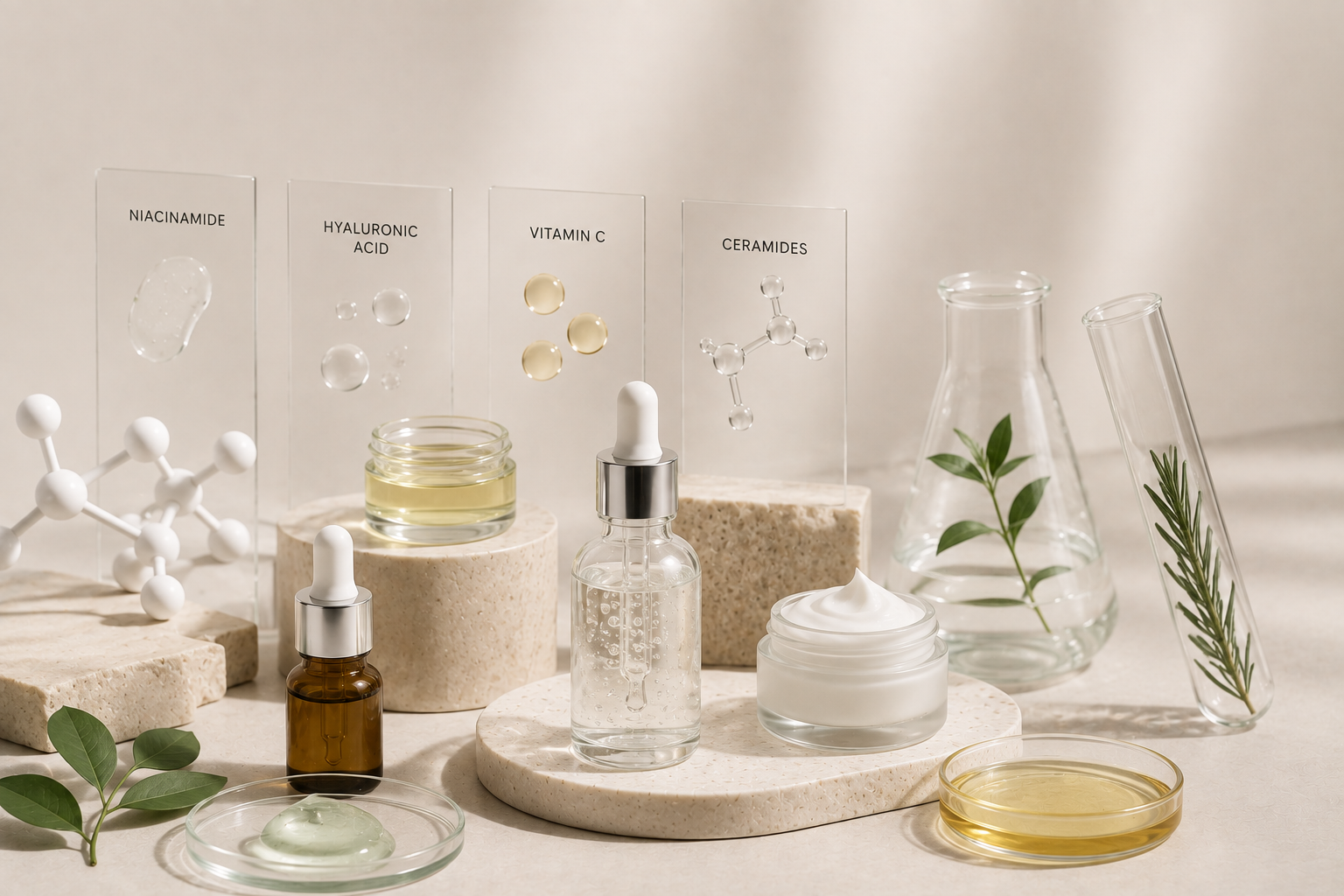
Consumers are no longer choosing skincare products only by brand name or packaging. They are actively looking for familiar ingredients, researching their benefits, comparing formulations, and choosing products based on specific skin concerns — a shift that is creating new opportunities for skincare brands and manufacturers alike.
According to Mintel’s 2026 India skincare ingredient research, Indian consumers are moving toward a more efficacy-led and evidence-based approach to skincare, with growing interest in advanced performance ingredients and biotechnology. For brands planning new products, understanding these skincare ingredient trends is important for deciding which formulations, product categories, and claims are likely to resonate — and it’s exactly the kind of thinking our custom formulation team works through with every brand we partner with.
What’s driving the shift:
- Ingredient-led purchasing behaviour
- Efficacy-led, evidence-based formulations
- Rise of dermatology-led brands
- Growing digital and social media influence
- Focus on the full formula, not one hero ingredient
- Texture innovation for varied Indian climates
- A move toward simpler, targeted routines
- Growing demand for responsible ingredient education
10 Skincare Ingredient Trends India Brands Should Watch
From established actives to emerging biotechnology-inspired ingredients, here’s what’s shaping formulation decisions this year.
Niacinamide — Still India’s Leading Skincare Ingredient
Niacinamide (vitamin B3) remains one of the most versatile actives in modern skincare, commonly used for oil and sebum management, uneven-looking skin tone, barrier support, and pore appearance. Its versatility makes it valuable across a brand’s entire product range — but higher concentration alone doesn’t make a better product; the finished formulation matters more.
Hyaluronic Acid — A Hydration Essential
Hyaluronic acid remains highly relevant because hydration is a fundamental consumer need. As a humectant, it helps attract and retain water for a more hydrated, plump appearance, and is increasingly combined with panthenol and ceramides in multi-humectant systems.
Vitamin C — Brightening and Antioxidant Power
Vitamin C remains one of the best-known ingredients in the brightening and antioxidant category, commonly associated with dullness, uneven-looking skin tone, and collagen-supporting skincare. Different derivatives vary in stability, so formulation should be built around the complete system rather than the ingredient name alone.
Retinol and Retinal — Texture and Visible Ageing
Retinoids remain important for products positioned around visible signs of ageing and skin texture. Retinal (retinaldehyde) is receiving increasing attention in 2026, alongside classic retinol. Both require careful formulation, protective packaging, and clear consumer education rather than exaggerated claims.
Ceramides — Reshaping Barrier-Focused Skincare
The skin-barrier conversation has become one of the strongest developments in modern skincare. Ceramides are lipids naturally present in the skin barrier, and current trends show growing interest in ceramide complexes rather than a single ceramide highlighted on a label.
Peptides — Firming, Performance-Led Skincare
Peptides are short chains of amino acids used in formulations targeting firmness, elasticity, and visible signs of ageing. They appeal to consumers who want performance-focused skincare without building a routine around highly aggressive actives — different peptide technologies serve different formulation goals.
Salicylic Acid — Still Relevant for Oily, Blemish-Prone Skin
This beta hydroxy acid continues to be an important ingredient for oily and blemish-prone skin, commonly used for excess oil, congested-looking skin, and pore appearance. Because exfoliating actives can irritate when poorly formulated, product development needs to consider the complete formula and clear usage guidance.
Azelaic Acid — An Emerging Multifunctional Active
Azelaic acid is gaining attention among consumers looking for multifunctional skincare, commonly used for uneven skin tone, blemish-prone skin, visible redness, and post-blemish marks — often without an overly complicated ingredient list.
Ectoin — Barrier Support Meets Environmental Protection
Ectoin is an emerging ingredient gaining attention as skincare moves toward barrier support and environmental protection. Unlike exfoliating or brightening actives, it’s generally positioned around skin resilience, hydration, and protection from environmental stressors.
PDRN — Regenerative, Biotech-Inspired Skincare
PDRN (polydeoxyribonucleotide) is attracting considerable attention in global beauty, reflecting a broader movement toward advanced, science-led skincare. It represents a more emerging opportunity than established actives like niacinamide, so claims should accurately reflect the evidence and regulatory requirements for the finished product — something our formulation team works through with brands before launch.
Which Ingredients Should New Brands Choose?
There is no single ingredient every new skincare brand needs — the right choice depends on your target consumer.
| Consumer Need | Ingredients to Consider |
|---|---|
| Hydration | Hyaluronic Acid, Panthenol |
| Barrier Support | Ceramides, Niacinamide |
| Brightening | Vitamin C, Niacinamide, Azelaic Acid |
| Blemish Care | Salicylic Acid, Azelaic Acid |
| Visible Ageing | Retinol, Retinal, Peptides |
| Premium Skincare | Peptides, Ectoin, PDRN |
| Sensitive Skin | Ceramides, Ectoin, Panthenol |
| Multi-Benefit Skincare | Niacinamide, Peptides, Azelaic Acid |
Frequently Asked Questions About Skincare Ingredient Trends in India
Get answers to common questions about ingredient-led formulation, product development, and manufacturing in India.
Why Gladios Is a Skincare Manufacturing Partner for Ingredient-Led Brands
Gladios Products Pvt. Ltd. helps brands turn ingredient trends into commercially viable formulations — from niacinamide, vitamin C, and hyaluronic acid staples to emerging actives like ectoin and PDRN. Our team supports custom formulation and private label manufacturing at every stage, from a brand’s first product to a full portfolio.
Explore Custom Formulation- Niacinamide, Vitamin C & HA formulations
- Barrier-focused ceramide & peptide systems
- Retinol, retinal & exfoliating acid formulations
- Emerging actives: ectoin & PDRN
- Stability & ingredient-compatibility testing
- Private label skincare manufacturing
- Texture development for Indian climates
- Scalable, quality-controlled production
What Brands Should Consider Before Chasing Ingredient Trends
Trends should not dictate formulation decisions on their own. These are the factors that separate a trend-led label from a genuinely effective product.
The Future of Skincare Ingredient Trends in India
Established ingredients such as niacinamide, hyaluronic acid, vitamin C, retinoids, ceramides, peptides, and salicylic acid remain highly relevant, while emerging ingredients such as azelaic acid, ectoin, and PDRN are creating new opportunities for premium and innovation-focused brands.
But trends should not dictate formulation decisions on their own. A successful skincare product starts with a clear consumer problem, followed by appropriate ingredient selection, formulation expertise, testing, packaging, and responsible product communication. For brands ready to turn a trending ingredient into a finished product, working with an experienced manufacturing partner can make the difference between a good idea and a commercially viable launch.